
Case Studies
iPPi
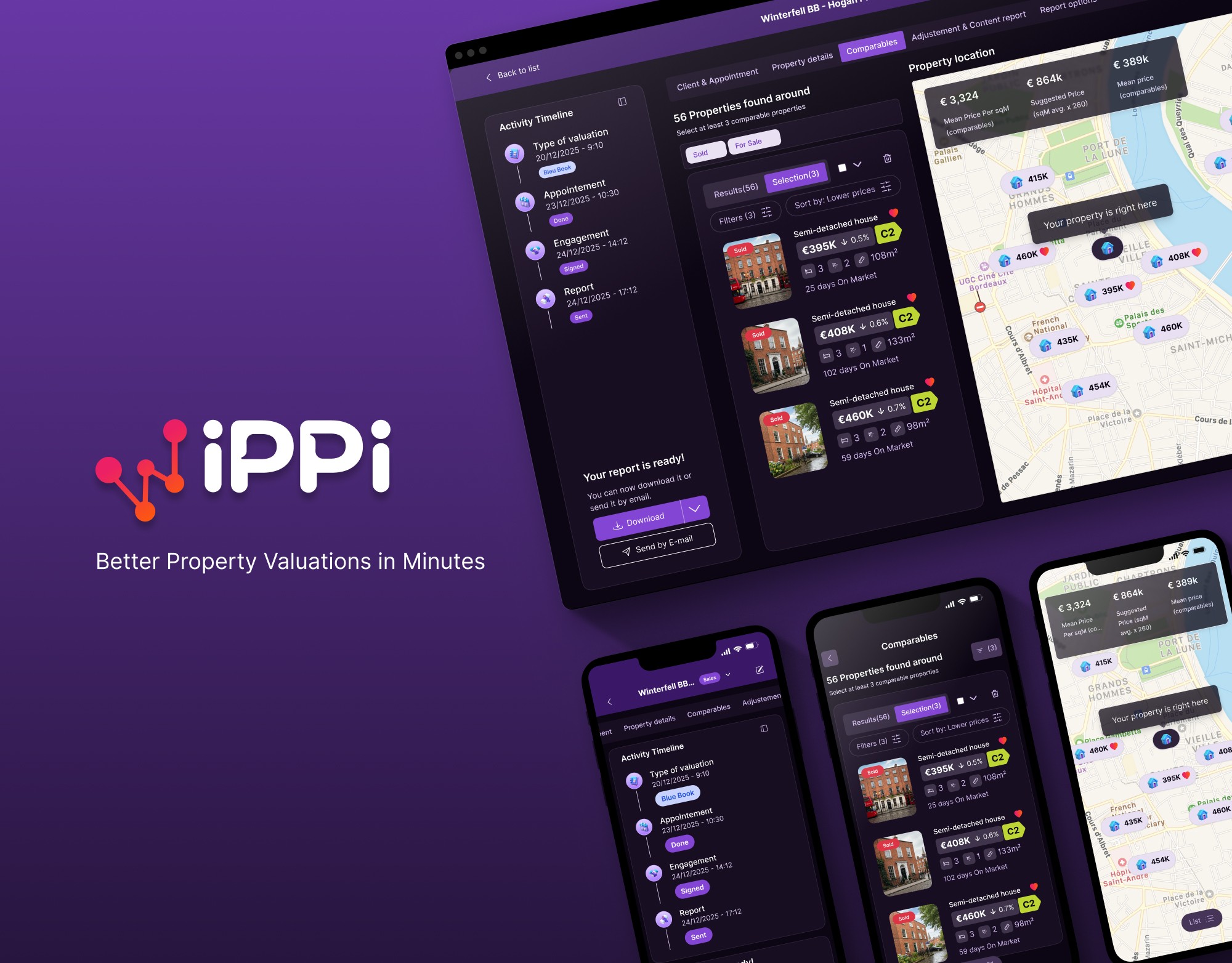
iPPi.io is a SaaS platform enabling real estate professionals to create compliant property appraisals and valuations.
SaaS
B2B2C
Refonte
SaaS
Identity
🧼 Clarified and simplified the appraisal & valuation user journey
🧠 Reduced cognitive load throughout the form flow
📊 Improved data continuity (no information loss when navigating back)
🎯 Better alignment between user needs, business goals, and technical constraints
⭐️ Increased perceived product credibility and modernity for end clients
🤙🏻 Improved usability feedback from agents and agency managers during testing

John Kenndy
CEO
View John's Kennedy
Letter of recommendation !
Reduce the time it takes for agents to complete property valuations and boost confidence in the tool.
Real estate professionals struggle to produce clear, reliable appraisals when tools feel outdated, confusing, or prone to losing information. The previous iPPi experience created friction instead of confidence, making the appraisal journey long, fragmented, and error‑prone.
The challenge was to restore clarity, continuity, and trust throughout the entire valuation process - while introducing new, profession‑specific features that better support the realities of appraisal work.
Discovery
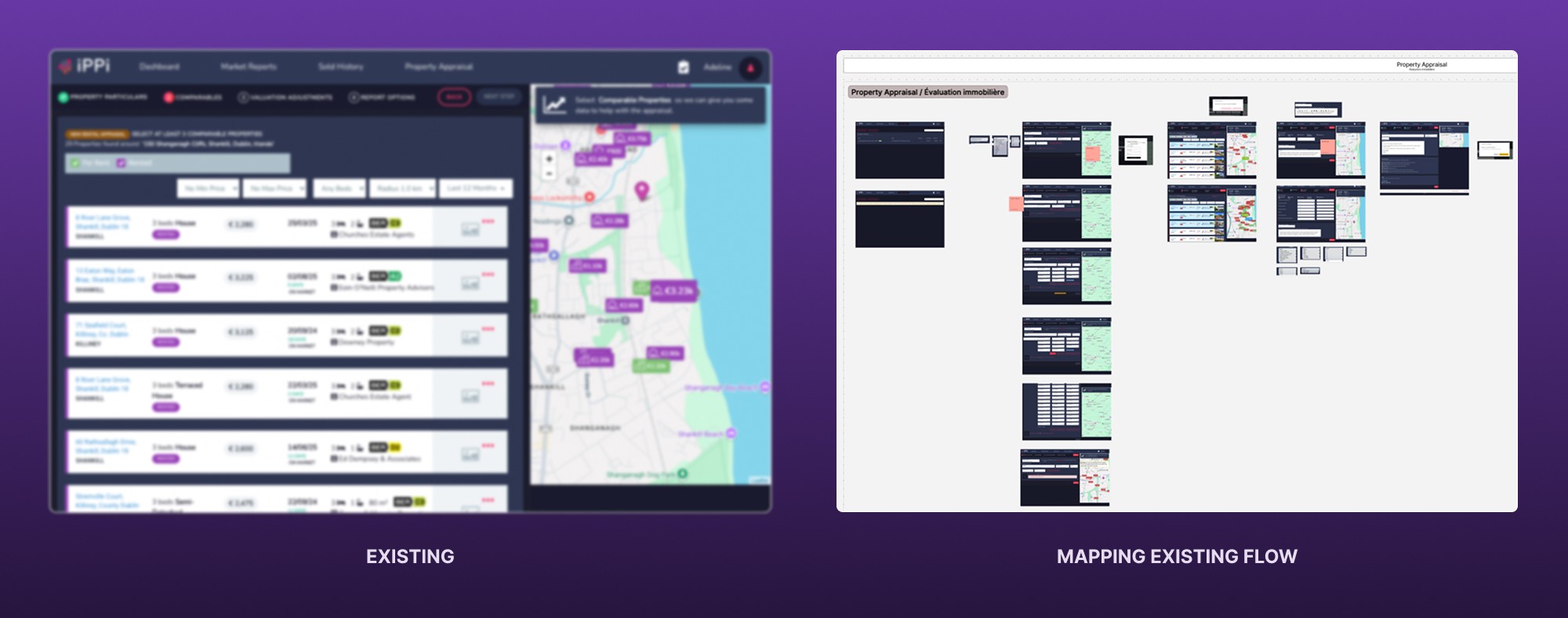
I conducted a full audit of the existing SaaS, mapping a complex and fragmented experience into clear user journeys.
To better understand the product logic, I designed initial wireframes based on current flows and aligned product vision and strategic goals through two working sessions with the founder.
Insights were validated through a quantitative survey conducted with agency managers and real estate agents.
Based on these findings, the user flow was simplified and unnecessary steps removed, leading to:
Clearer and more efficient journeys
Reduced complexity across the appraisal process
Addition of a new feature following the interviews
Two internal wireframe iterations delivered
UX design
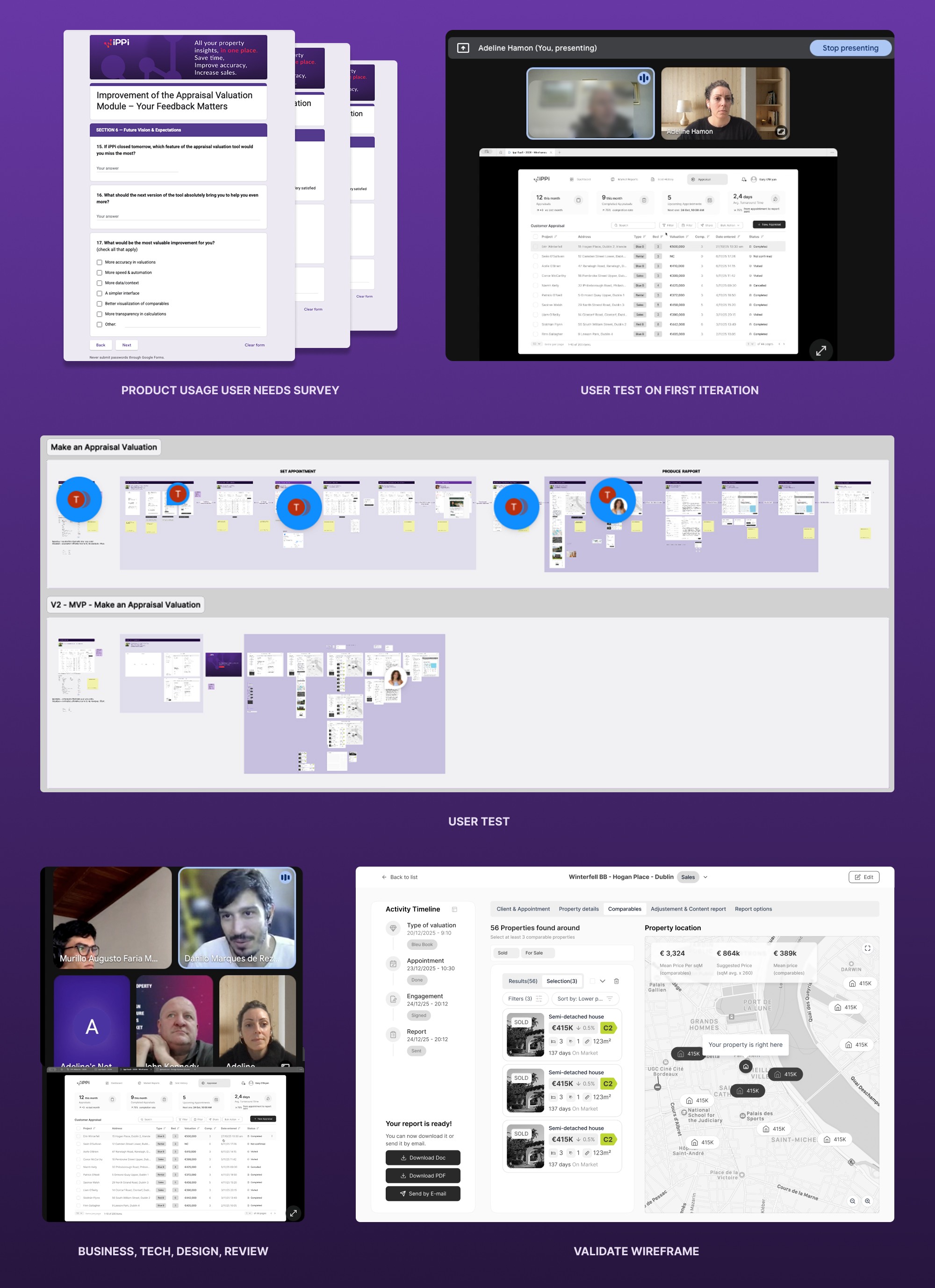
In parallel, I conducted user interviews based on the internally iterated wireframes, leading to targeted adjustments that improved clarity, pacing, and decision-making across the flow.
A dedicated review session with the development team helped identify technical constraints and opportunities, allowing the experience to be refined and aligned with delivery needs.
This resulted in a third wireframe iteration with a stronger simplification pivot and a more straight-to-the-point approach, which was well received by both users and developers.
Key outcomes at this stage included:
Improved usability and flow clarity
Strong alignment between UX, business goals, and technical feasibility
Agreement on a shared component library for consistency and development efficiency
Identity & UI
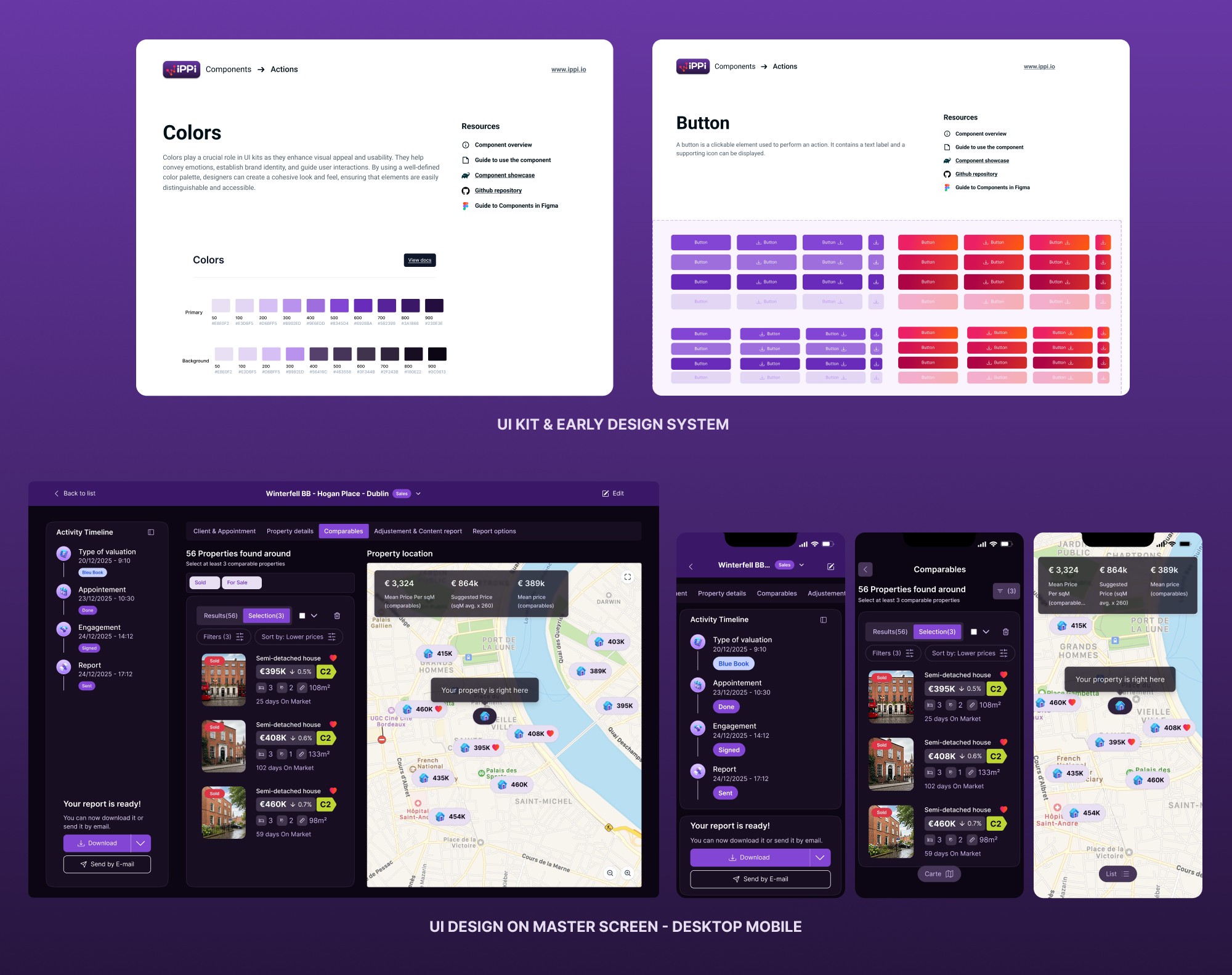
I designed a complete UI Kit from scratch, modernizing the interface and making it scalable and dark-mode ready.
In parallel, I redesigned the visual identity to reinforce product credibility, clarity, and maturity, and produced master UI screens for both desktop and mobile.
This work laid the foundations for a Design System, with a focus on:
Reducing future design debt
Ensuring visual and functional consistency
Supporting long-term product scalability
Lead Generation & Additional Contributions
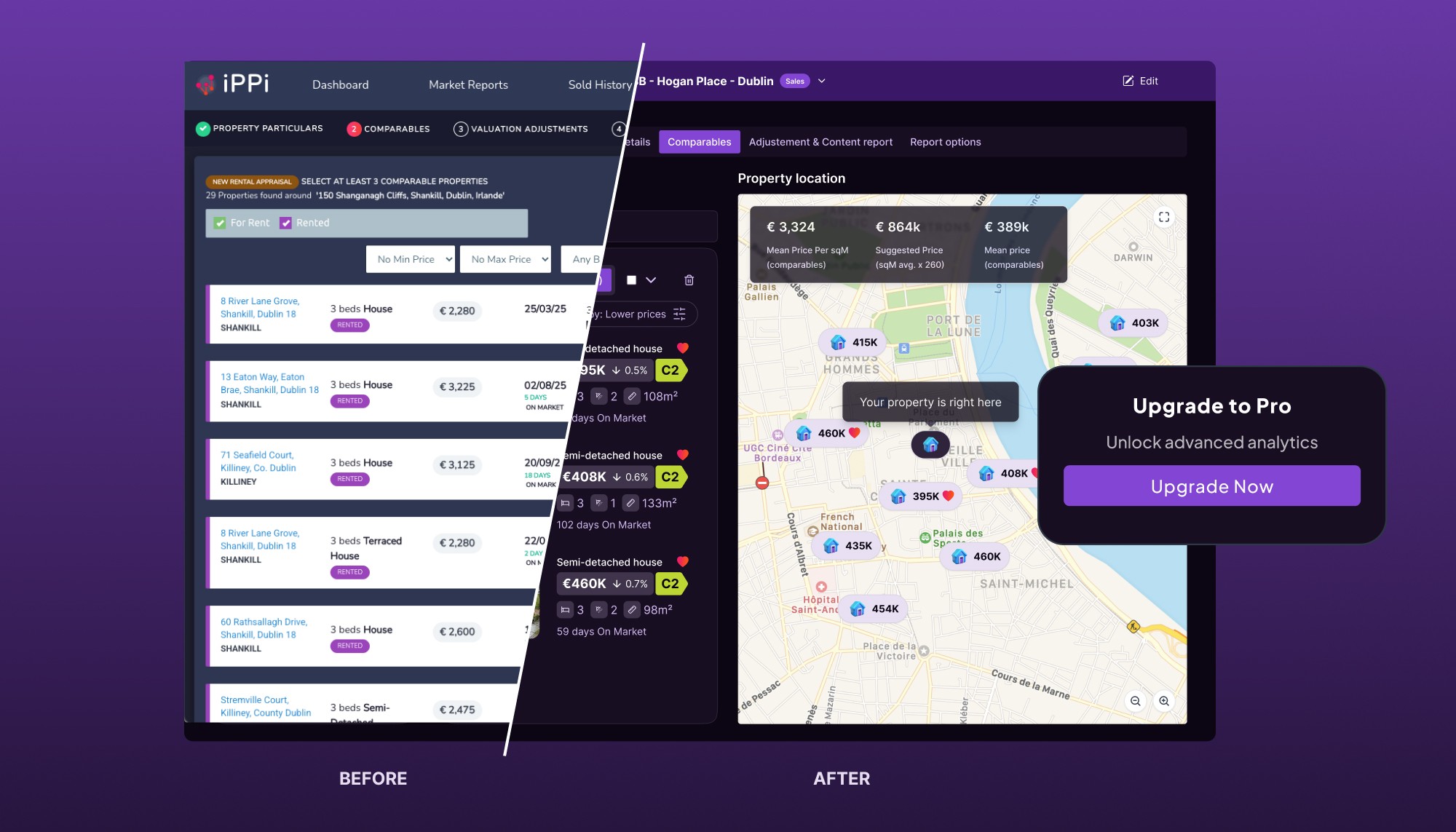
I optimized the previously overloaded main navigation to improve clarity and prioritization.
Beyond UX, I also contributed a business-oriented perspective by defining a Premium plan with differentiated features aligned with user value and revenue strategy.
The redesigned journey strengthened product-to-client interactions through:
Clearer contact touchpoints
Call booking and shared calendar availability
Improved alignment between product usage and client engagement
I redesigned the appraisal and valuation flow to simplify a complex, outdated experience and eliminate data loss.
The work combined product audit, iterative wireframes, user testing, a refreshed visual identity, a scalable dark-mode-ready UI Kit, and the introduction of Premium features to support business growth.
iPPi



Have a project in mind?
Let’s talk